


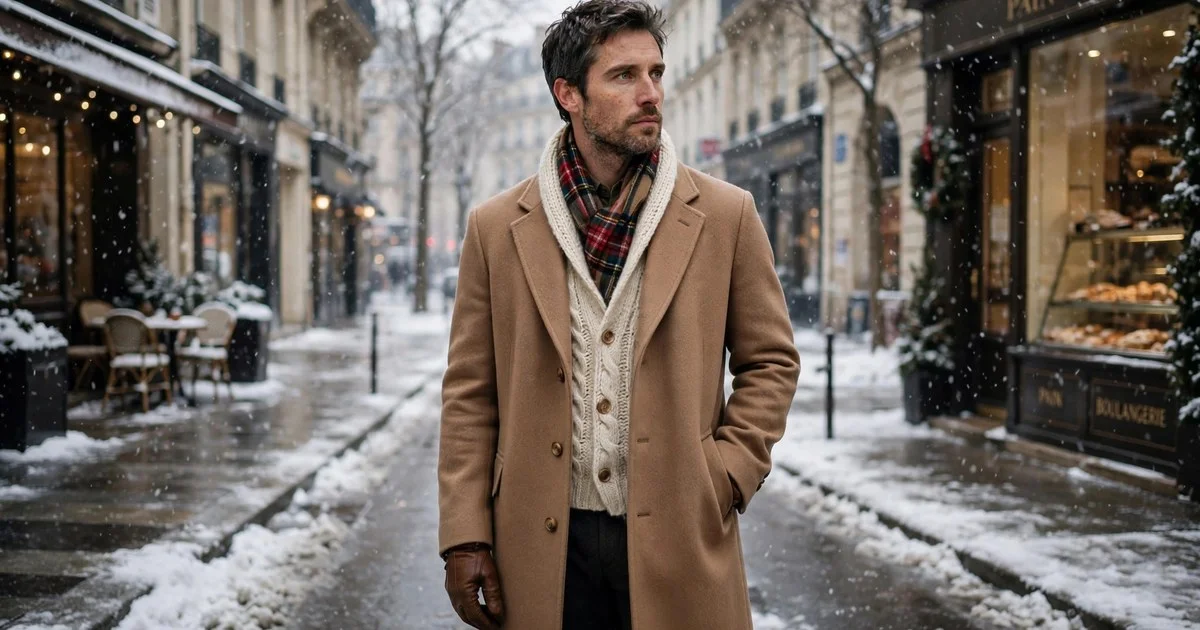
Every winter I watch the same thing happen: guys either freeze in one thin jacket or disappear inside a mountain of fabric. Neither has to happen. Good winter layering for men is a system, not a struggle — three smart layers, each with a job, and you stay warm without looking like a sleeping bag. Once I cracked the formula, layering honestly became my favorite part of cold-weather dressing, because it lets you build outfits instead of just surviving the temperature. If celebrity polish is your thing, notice how the guys in my Timothee Chalamet fashion style breakdown layer coats over knits — same system, red-carpet edition.
Layer One: The Base That Does the Boring Work
Every smart approach to men’s winter layering starts with the layer nobody sees. A merino wool or thermal base top pulls sweat away from your skin and traps warmth where it counts. Cotton is the enemy here — it gets cold and stays cold. Fit matters too: your base should sit close to the body without squeezing, because trapped air between layers is literally what insulates you. Get this layer right and the rest of winter layering for men gets twice as easy.
Layer Two: The Mid Layer Is Where Style Lives
The mid layer is the one people actually see when you take your coat off indoors, so this is where layering for men in winter turns practical into stylish. Think chunky knit sweaters, quarter-zip pullovers, flannel overshirts, and light puffer vests. My personal rotation: a cream fisherman sweater for weekends, a navy quarter-zip for the office, and a quilted vest for everything in between.
Mix textures — ribbed knit under smooth wool, flannel over a plain tee — and even two simple pieces suddenly look like a planned outfit. Pro tip from years of trial and error: the mid layer is the cheapest place to experiment with winter layering for men, because one bold knit can refresh every coat you already own.
Layer Three: The Outer Layer Seals the Deal
The final step of cold-weather layering for men is the coat, and it should be the longest, cleanest piece you own. A wool overcoat handles workdays and dinners; a technical parka handles storms and sub-zero commutes. Length is your friend — a coat that hits mid-thigh or knee keeps the wind off your legs and makes every layer underneath look sharper, which is the entire point of winter layering for men. This is the same tailoring logic I covered in my oversized blazer guide: the outer piece frames everything, so choose it like you mean it.
Three Layering Formulas That Never Fail
Formula one, the office: thermal base, merino crew-neck, wool overcoat, tailored trousers, Chelsea boots. Formula two, the weekend: base tee, flannel overshirt, puffer vest, jeans, and your favorite boots — swap in sneakers from my trending sneakers of 2026 roundup when the pavement is dry. Formula three, the night out: black base, dark turtleneck, long coat, slim trousers — winter layering for men at its simplest after dark. Three formulas, endless small variations — that is layered winter dressing for men working the way it should.
Mistakes That Ruin Winter Layering for Men
The biggest winter layering mistakes men make: three bulky layers instead of three smart ones, every layer the same length (you want a visible step between hems), and forgetting the extremities. A scarf, gloves, and warm socks add more real warmth than a fourth sweater, and a scarf is also the easiest pop of color in the whole system of winter layering for men. One more: never let your inner layer hang below your coat in a sloppy way — a small peek is style, a long tail is an accident.
Layering for Every Body Type
Good layering for men in cold weather is not one-size-fits-all advice. Bigger guys: keep layers thin and structured — a fine-gauge knit and an unpadded coat add warmth without width, and vertical lines from an open overshirt do quiet wonders. Slimmer guys can lean into chunkier knits and vests, because layering on slimmer frames is a chance to add visual presence. Tall men should break the silhouette with contrasting layer lengths, while shorter men keep hems clean and closer together so the layers do not chop them in half. The rules bend for every body; the three-layer system of winter layering for men itself never breaks.
Accessories: The Secret Fourth Layer
Ask anyone who truly understands how men should layer in winter and they will tell you the accessories are not decoration — they are the fourth layer. A wool scarf seals the gap at your neck where coats leak heat, beanies stop the warmth your head radiates all day, and leather gloves make a plain coat look expensive.
Smart dressers treat these pieces as part of the outfit plan in winter layering for men, not an afterthought grabbed at the door. Match your scarf to your mid layer, your gloves to your boots, and suddenly a simple three-layer outfit reads like it came from a stylist’s mood board. That finishing touch is where a good layered outfit goes from warm to unforgettable.
Colors That Make Winter Layering for Men Easy
Build your layered winter wardrobe for men around navy, charcoal, camel, cream, and black, and every layer will match every other layer. Then add one wild card — a rust scarf, a burgundy knit, an olive vest — to keep the neutrals from getting boring. For more cold-weather ideas across the family, my guide to cozy winter outfits uses the same color logic, and the GQ style section is a solid extra read on winter layering for men if you want a second opinion.
Master the three layers and winter layering for men stops being a chore and becomes the best-dressed season of your year. Warm is easy. Warm and sharp — that is the whole game, and now you know how to play it. Start with one great coat, one honest base layer, and a mid layer you love, and layering will quietly become the reason you look forward to cold mornings instead of dreading them. Trust the system, keep the colors simple, and let the layers do the heavy lifting all season long.












Leave a Reply